National Mentoring Month: Expand Your Universe. Mentor a Child.
General Colin L. Powell will head National Mentoring Month 2010. Since 2002, January has been a time to celebrate mentors and acknowledge the vital role that they play in the development of young people.
National Mentoring Month is spearheaded by the Harvard Mentoring Project of the Harvard School of Public Health, MENTOR and the Corporation for National and Community Service. Click here to read more about this year’s campaign, including the Thank Your Mentor Day™ (January 21st).
President Enacts Federal Funding for Mentoring
 President Obama recently signed a measure into law that will provide nearly $50 million in funding for The Mentoring Children of Prisoners Program.
Read the press release here.
U.S. Senate Passes National Mentoring Month Resolution!
 Yeah!! The Senate has FINALLY officially recognized January as National Mentoring Month. Thank you Senators John McCain (R-AZ) and John Jerry (D-MA) for introducing the resolution.
Read the full resolution:
U.S. Senate Passes National Mentoring Month Resolution
Duncan Nugget® #52: Time to Do Something Different?

Self-motivation is crucial to achievement. But it will only last if you believe that there is a beneficial relationship between your behavior and your desired outcome.
Million-Dollar Question:
How does what you do in life help you to get what you want out of life?
If your answer is “it doesn’t” or “I don’t know” then why in the world are you doing it?! It’s your life, right? Maybe it’s time to do something different.
- Topics: Character DevelopmentDuncan NuggetsPersonal DevelopmentProfessionalSelf-Awareness & PurposeTeenYoung Adult
MTV: A Thin Line – Campaign to Fight Digital Abuse
 Thanks @MTV. I have personally heard from dozens of young people who have been digitally abused. It sucks. Seriously.
In order to help deal with the problem MTV has a new multi-year initiative called A Thin Line to empower America’s youth to identify, respond to and stop the spread of digital abuse. Digital abuse is an emerging issue that includes behaviors like sexting, cyberbullying, and digital dating abuse.
Expect Problems and You’ll Probably Get Them

Recently, I read an article in Science Daily titled “Stereotypes Can Fuel Teen Misbehavior“. According to the article researchers interviewed a group of teens and their mothers about teen behavior. A year later, the researchers interviewed the group again. The teens whose mothers expected them to be rebellious reported higher levels of risk-taking behaviors than their peers.
I am not surprised by that at all.
The Perils of Popularity
Here are a couple of articles from Science Daily that outline the things young people go through in order to be popular.
The Dark Side Of Adolescent Popularity
“The new study was carried out on 1,319 teenagers at seven schools in Valencia, and shows that teenagers whose social status is questioned by their peers and are socially rejected by their classmates, or who do not have intimate friendships, suffer from greater feelings of loneliness, low self-esteem and low levels of satisfaction with their lives.”
Teens’ Perception That They Are Liked Found To Be At Least As Important As Actually Being Liked
“Teenagers who felt good about their own social standing did well over time, the study found, regardless of how popular they were (popularity was gauged based on assessments by peers at school). These teenagers were increasingly less hostile and more frequently sought out by their peers. Teenagers who were considered popular by their peers also did well, regardless of their own perceptions of their social standing.”
“Adolescents who lacked both a strong sense of their own social acceptance and who were rated by their peers as unpopular fared the worst, according to the study. They were increasingly more hostile, less sought out, and more withdrawn over time.”
Hey! Remember to Sign Up.
Books & Posters


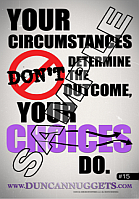

The Leading Soft Skills Training Program for STEM Students. Check out S3TEM.com

The 5 Soft Skills Clusters
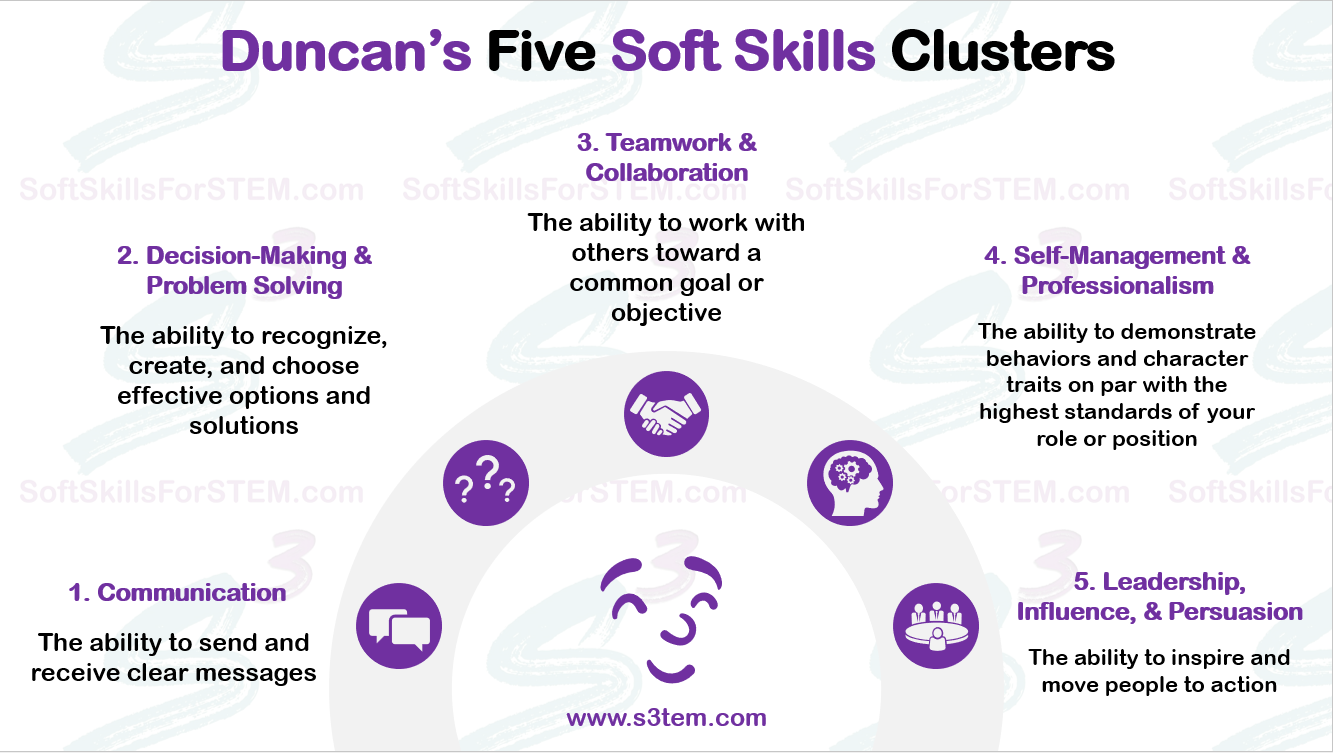
Click here for a list of soft skills definitions, and behavioral indicators.